 By: Alcyone / Source: Conscious Life News
Everything begins with your consciousness. Everything that happens in your life, and everything that happens in your body, begins with something happening in your consciousness.
Your consciousness is who you are, your experience of Being.
You decide what ideas to accept and which to reject. You decide what to think, and you decide what to feel. When these decisions leave you with residual stress, you experience the stress as if in your physical body. We know that stress creates symptoms. The interesting question is, “Which stress creates which symptoms?” When we are able to quantify this process, we are then able to see the body as a map of the person’s consciousness, relating particular symptoms to particular stresses and particular ways of being, in the same way that Type “A” Behavior has been able to be associated with heart disease.
Everything Starts In Your Consciousness
To understand this map, we must first orient ourselves to the idea that the causes of symptoms are within. While it’s true that germs cause disease and accidents cause injuries, it is also true that this happens in accord with what is happening in the consciousness of the person involved.
Germs are everywhere. Why are some people affected and not others? Something different is happening in their consciousness.
Why do some patients in hospitals respond better to treatment than others? They have different attitudes. Something different is happening in their consciousness When someone is injured in an “accident,” why is it that a very specific part of the body is affected, and that it is the same part that has had habitual problems? Is that an “accident,” or is there a pattern and an order to the way things happen in our bodies?
You Are A Being of Energy
Your consciousness, your experience of Being, who you really are, is energy. We can call it “Life Energy” for now. This energy does not just live in your brain; it fills your entire body. Your consciousness is connected to every cell in your body. Through your consciousness, you can communicate with every organ and every tissue, and a number of therapies are based on this communication with the organs which have been affected by some kind of symptom or disorder.
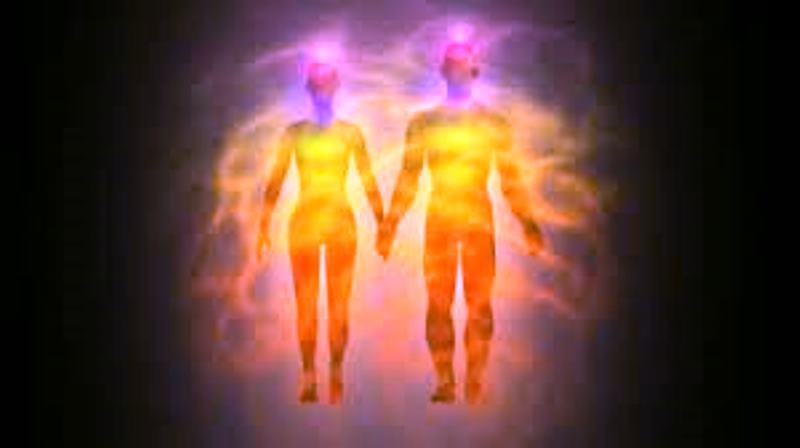
This energy which is your consciousness, and which reflects your state of consciousness, can be measured through the process known as Kirlian photography. When you take a Kirlian photograph of your hand, it shows a certain pattern of energy. If you take a second photograph while imagining that you are sending love and energy to someone you know, there will be a different pattern of energy shown on the Kirlian photograph. Thus, we can see that a change in your consciousness creates a change in the energy field that is being photographed, which we call the aura.
This energy field shown in the Kirlian photographs has been quantified, so that when there are “holes” in particular parts of the energy field, these are said to correspond to particular weaknesses in specific parts of the physical body. The interesting thing about this is that the weakness shows up in the energy field before there is ever any evidence of it on the physical level.
Thus, we have an interesting direction of manifestation shown through what we have described.
1. A change of consciousness creates a change in the energy field.
2. A change in the energy field happens before a change in the physical body.
The direction of manifestation is from the consciousness, through the energy field, to the physical body.
Consciousness——1——>–>Energy Field——2——>->Physical Body
When we look at things in this way, we see that it is not the physical body creating the energy field, the aura, but rather the aura or energy field that is creating the physical body. What we see as the physical body is the end result of a process that begins with the consciousness.
We Each Create Our Reality
When someone makes a decision that leaves them with stress, creating a blockage in the energy field with a sufficient degree of intensity, this creates a symptom on the physical level. The symptom speaks a certain language, which reflects the idea that we each create our own reality. When the symptom is described from that point of view, the metaphoric significance of the symptom becomes clear. Thus, instead of saying, “I can’t see,” the person would have to say, “I have been keeping myself from seeing something.” If they cannot walk, they would have to say, “I have been keeping myself from walking away from something.” And so on. We must understand that there are no accidents and no coincidences. Things do happen according to a pattern and order.
The Human Directional System
We can say that we have an inner guidance system, a connection to our Higher Self, or our Inner Being, or whatever name we choose to give this Higher Intelligence. This inner guidance system functions through what we call our intuition, or our instinct. It speaks a very simple language. Either it feels good, or it doesn’t. All the rest is just politics.
We are told we should move with what feels good, and do not do what doesn’t feel good to us. We are told totrust this inner voice. When we don’t follow this inner voice we feel tension. We feel not-good.
Then, the voice must get louder. The next level of communication is through the emotions. As we move more and more in the direction that feels not-good, we experience more and more emotions that feel not-good, and at some point we can say, “I should have listened to myself when I thought to move in the other direction.” That meant that we heard the inner voice. Otherwise, we could not have said, “I should have listened.” If we make the decision we know is the right one for us, and therefore change direction, there is a release of tension, we feel better, and we know we are again on the right track.
If we continue to move in the direction that feels not-good, the communication reaches the physical level. We create a symptom, and the symptom speaks a language which reflects the idea that we each create our own reality. When we describe the symptom from that point of view, we can understand the message.
If we change our way of being, we have received the message, and the symptom has no further reason for being. It is able to be released, according to whatever we allow ourselves to believe is possible.
If we created the symptom with a decision, we are also able to release it with a decision.
As an hypothesis, we can imagine that someone makes a decision that it is not a good idea to express what they want. From that moment, whenever there is something they want, they keep themselves from expressing it, and therefore from having what they want. That feels not-good. The tension grows. They feel more and more not-good as they keep themselves from expressing what they want and not having it.
Eventually, something happens to create a symptom on the physical level, and their right arm is affected. It could have happened through falling from a ladder, or in an automobile accident, or by pinching a nerve in the neck, or by “sleeping in a draft.”
Something had to happen on the physical level to create the symptom, in order to give the person the message on the physical level about what they had been doing to themselves. We do to ourselves literally what we have been doing to ourselves figuratively.
The effect is that the person cannot move their arm. They are keeping themselves from reaching for something, and since it is the right arm, on the “will” side of the body, they are keeping themselves from reaching for or going for what they want. They have been giving themselves reasons to not believe that they could have what they want. When they begin to do something different in their consciousness, they notice that something different begins to happen with their arm, and the symptom is able to be released.
Chakras And The Map
To understand the map of the consciousness that the body represents, we can turn to some ancient Hindu traditions which have been studying consciousness for thousands of years, and which use the language of the chakras.
Chakra is a Sanskrit word, and it means “wheel,” or “vortex,” because that’s what it looks like when we look at it. Each chakra is like a solid ball of energy interpenetrating the physical body, in the same way that a magnetic field can interpenetrate the physical body.
The chakras are not physical. They are aspects of consciousness in the same way that the auras are aspects of consciousness The chakras are more dense than the auras, but not as dense as the physical body, but they interact with the physical body through two major vehicles, the endocrine system and the nervous system. Each of the seven chakras is associated with one of the seven endocrine glands, and also with a particular group of nerves called a plexus. Thus, each chakra can be associated with particular parts of the body and particular functions within the body controlled by that plexus or that endocrine gland associated with that chakra.
Your consciousness, your experience of being, represents everything it is possible for you to experience. All of your senses, all of your perceptions, all of your possible states of awareness, can be divided into seven categories, and each of these categories can be associated with a particular chakra. Thus, the chakras represent not only particular parts of your physical body, but also particular parts of your consciousness. When you feel tension in your consciousness, you feel it in the chakra associated with the part of your consciousness experiencing the stress, and in the parts of the physical body associated with that chakra. Where you feel the stress depends therefore on why you feel the stress. When someone is hurt in a relationship, they feel it in their heart. When someone is nervous, their legs tremble and their bladder becomes weak.
When there is tension in a particular part of your consciousness, and therefore in the chakra associated with that part of your consciousness, the tension is detected by the nerves of the plexus associated with that chakra, and communicated to the parts of the body controlled by that plexus. When the tension continues over a period of time, or reaches a particular degree of intensity, the person creates a symptom on the physical level. Again, the symptom served to communicate to the person through their body what they had been doing to themselves in their consciousness. When the person changes something about their way of being, they are able to release the stress that had been creating the symptom, and they are then able to return to their natural state of balance and health.
Reading The Map
When we are reading the body as a map of the consciousness within, we work with the idea that the tensions in the body represent tensions in the person’s consciousness concerning what was happening in the person’s life at the time that the symptom developed. The person was feeling stress about something that was happening in their life at that time.
We are going to examine the map of consciousness that the chakras provide, in order to understand the language of the symptoms that are associated with each chakra. In order to complete this map, however, we also need to look at ourselves as each a polarity of yin and yang, feminine and masculine characteristics.
For most people, their right side is their yang side, their will side, their acting or active side, and the left side is their yin side, their female side, their feeling or adaptive side. For people who were born left-handed, this polarity is reversed. Thus, for a right-handed person, their right leg can be described as their will leg, or their male leg, or the foundation of their will, but for a left-handed person, their left leg would be their male leg or will leg, and so on. Thus, we can talk about the will arm, or the will eye, or the will nostril, etc., and which side it is on will depend upon whether the person is right-handed or left-handed at birth.
Each of the chakras is energy vibrating at a certain frequency, in a logical and orderly sequence of seven vibrations. As we move up the scale, the elements become more and more subtle, moving through the five physical elements of earth, water, fire, air, and ether, to the spiritual elements of inner sound and inner light. The heaviest element is on the bottom, the lightest on the top. It is a logical and orderly sequence.
The colors of the spectrum also represent a series of seven vibrations in a logical and orderly sequence, as do the notes of the musical scale. Thus, we can put the heaviest vibrations or the longest wavelength on the bottom and the lightest on the top, and a particular color can be used to represent a chakra in its clear state, as can a particular musical note. Music played in a certain key vibrates a particular chakra, and we feel a particular way when we hear that music. Our relationship with a certain color says something about our relationship with the part of our consciousness that the color represents.
The Root Chakra is associated with the parts of our consciousness concerned with security, survival, or trust. For most people, this concerns the parts of their consciousness concerned with money, home, and job. When this chakra is in its clear state, the person is able to feel secure, be present in the here and now, and be grounded. When there is tension in this chakra, it is experienced as insecurity or fear. When there is more tension, it is experienced as a threat to survival.
Parts of the body controlled by the sacral plexus and this chakra include the skeleton system, the legs, and the elimination system. Symptoms in these parts of the body represent, therefore, tensions at the level of the Root Chakra, and we therefore know that the person is seeing the world through a perceptual filter of insecurity or fear. The adrenal glands are also associated with this chakra.
If one leg is affected, we can see whether it is the male leg or the female leg, and thus whether it has something to do with trust in a male or trust in a female. We can also see it as having something to do with trust in the will, or the aspects of trust in the foundations the emotional being, related to what was happening in the person’s life at the time the symptom developed.
The physical sense of smell, and therefore the organ of the sense of smell, the nose, is associated with the Root Chakra. Symptoms at the level of the nose or affecting the sense of smell reflect tensions at the level of the Root Chakra.
Each chakra is associated with an element. The Root Chakra is associated with the element of earth, and reflects something about the person’s association with the earth, or how they feel about being on the earth, which we call Mother Earth. This chakra is also associated with our relationship with our mother. When someone experiences a sense of separation from their mother, or not feeling loved by their mother, they cut off their roots and experience symptoms of tensions at the level of the Root Chakra until they can again open to accept their mother’s love.
When a child comes into the world in the traditional family structure, the mother provides the nourishment and the father provides the direction. Thus, in the child’s relationship with its mother, it makes certain decisions about the way things are. The relationship with the mother thus becomes a model for the person’s relationship with everything that represents security – money, home, and job.
The Root Chakra is associated with the color red.
The Abdominal Chakra is associated with the parts of our consciousness concerned with food and sex – the communication from the body to the person within it, about what the body wants or needs, and what it finds pleasurable. It also is related to what is happening in their consciousness about having children. When this chakra is in its clear state, the person is in touch with this communication, and listening to and responding appropriately to what the body wants and needs.
Parts of the body controlled by the lumbar plexus include the reproductive system and the abdomen, and the lumbar region of the back.
The sense of taste is associated with this chakra, as is the element of water. When someone does not have a clear relationship with water (swimming, for example, or being on a boat), this reflects their attitudes about the parts of their consciousness that this chakra represents.
Tensions on the will side or the emotional side of this chakra indicate tensions in the person’s consciousness as conflicts between either the will or the emotions with what the person’s body is asking for.
This chakra is associated with the sense of taste, and with appetite. It is also involved with the person’s willingness to feel their emotions.
The second chakra is associated with the color orange.
The Solar Plexus Chakra is associated with the parts of our consciousness having to do with perceptions of power, control, or freedom. In its clear state, it represents ease of being, and comfort with what is real for one’s self – being comfortable with who you are.
Parts of the body associated with this chakra include the organs closest to the solar plexus – stomach, gall bladder, spleen, liver, etc. – as well as the skin as a system, the muscular system as a system, and the face in general.
The physical sense associated with this chakra is the sense of sight. Anyone with impaired eyesight experiences tension at the level of their solar plexus chakra about the issues of power, control, or freedom. Nearsighted people also experience tensions at the level of the Root Chakra, and experience the world through a perceptual filter of fear or insecurity. Those who are farsighted experience tension also at the level of the throat chakra, and see the world through a perceptual filter of anger or guilt. Astigmatics see through the emotional perceptual filter of confusion.
The endocrine gland associated with the Solar Plexus Chakra is the pancreas. We can say that diabetics are keeping sweetness from themselves. When someone gets too close with sweetness, they feel threatened in their power to be who they are, and an emotion comes up to create a safe distance again. The emotion is anger. Diabetes is associated with suppressed anger.
The element associated with this chakra is fire, and the person’s relationship with the sun says something about their relationship with the parts of their consciousness associated with the Solar Plexus Chakra.
The color of the Solar Plexus Chakra is yellow.
The Heart Chakra is associated with the parts of the consciousness concerned with relationships and our perceptions of love. The relationships we speak of here are with those people closest to our heart – partners, parents, siblings, children.
The parts of the body associated with this chakra include the heart and lungs, and the blood circulatory system as a system. This chakra is also associated with the thymus gland, which controls the immune system. When this is affected, as with AIDS, the person’s lifestyle separates them from someone they love.
The physical sense associated with this chakra is the sense of touch, in its aspect of relating to the person inside the body. For example, a massage given to someone with no sensitivity to what the person is feeling inside would be an example of the sensation we associate with the Abdominal Chakra, but when the masseur seems to have a sense of what the person inside the body is experiencing, then it includes the aspect of relating we associate with the Heart Chakra. When someone experiences extreme sensitivity about being touched, we would ask what was happening at the level of the Heart Chakra.
This chakra is associated with the element of air. When someone has difficulty with air, with breathing (asthma, emphysema, tuberculosis, etc.), we say that their relationship with air reflects their relationship with love – difficulty letting it in, or letting it out, for example
The color associated with the Heart Chakra is emerald green.
The Throat Chakra is associated with the parts of the consciousness concerned with expressing and receiving. Expressing can be in the form of communicating what one wants and what one feels, or it can be artistic expression, as an artist painting, a dancer dancing, a musician playing music, using a form for expressing and bringing to the outside what was within. Expression is related to receiving, as, “Ask, and ye shall receive.”
The throat chakra is associated with abundance, and with the state of consciousness called, “grace,” where it seems that what you want for you is also what God wants for you. Accepting what the abundant universe offers you requires a sense of unconditionally receiving.
This chakra is also associated with listening to one’s intuition, and flowing in a particular way where it seems that the Universe supports you in all that you do. It is the first level of consciousness from which one perceives another level of intelligence functioning, and one’s interaction with this other level of intelligence.
Parts of the body associated with this chakra include the throat, shoulders, and arms and hands. and the thyroid gland.
The sense of hearing is associated with this chakra, and the element of ether, the most subtle physical element, corresponding to what we find in deep space. The ether is the crossover between the physical and the spiritual dimensions. Someone looking at the world through this chakra watches the manifestation of their goals. The Will Arm represents manifesting what you want, and the Feeling Arm represents manifesting what makes you happy. Hopefully, the two point to the same thing.
Sky Blue is the color associated with this chakra.
The Brow Chakra is associated with the parts of the consciousness concerned with the spiritual view, and the home of the Spirit, the Being within. This level of consciousness is associated with what western traditions call the unconscious or subconscious, the part of our consciousness that directs our actions and our life. From this level we are aware of the motivations behind our actions. We can watch our outer theater from an inner point of view.
This chakra is associated with the carotid plexus, and the nerves on each side of the face, and the pituitary gland. Headaches in the temples or center of the forehead are associated with tensions at this level. This chakra controls the entire endocrine system as a system, and the process of growth.
The Brow chakra, also known as the Third Eye, is associated with extra sensory perception (ESP), the set of all inner senses that correspond to the outer senses, which together comprise spirit-to-spirit communication. The element associated with this chakra is a vibration known as the Inner Sound, the sound that one hears in their ears that does not depend upon something in the physical world. Some consider it a pathological condition. In some of the eastern traditions the ability to hear this is considered a necessary prerequisite to further spiritual growth.
The color associated with this chakra is Indigo, midnight blue, the color of lapis lazuli, or the color of the night sky during a full moon.
The Crown Chakra is associated with the parts of the consciousness concerned with unity or separation, and just as the Root Chakra showed our connection with Mother Earth, this chakra shows our connection with Our Father, Which Art in Heaven. At first, it is associated with our connection with our biological father. This becomes the model for our relationship with authority, and this becomes the model for our relationship with God. When there is a sense of separation from our biological father, the person closes this chakra, and the effect on the consciousness is a sense of isolation and aloneness, being in a shell, and difficult to make contact with those outside the shell.
The person feels as if they are hiding from God, or hiding from themselves, not seeing what is true for them in the deepest part of their consciousness, the part we call the soul.
This chakra is also associated with a sense of direction.
The parts of the body controlled by this chakra are the pineal gland, the brain, and the entire nervous system as a system.
The color associated with the Crown Chakra is Violet, the color of amethyst.
Using The Map
When there is tension in a particular part of the body, this represents a tension in a particular part of the consciousness, about a particular part of the person’s life. Being aware of these associations helps one to see the importance of resolving the tense issues in their life.
If it were only a question of doing what is necessary for the person to be happy, that would be reason enough to motivate the person to want to change something that doesn’t work for them, but here, we see that it is also a matter of health. The issues that are unresolved in a person’s life are, in fact, hazardous to their health.
When we see the correspondences between the consciousness and the body, we see the degree to which we each create our reality. In fact, those words begin to take on a new meaning. We see how everything begins in our consciousness and we are able to look around us at other aspects of our lives in the same way.
When we see how the body carries out the messages and deepest wishes of the Being within the body, we can realize that the process can go in more than one direction. If our consciousness is directing how we develop symptoms, it can also direct how we release these same symptoms. If our consciousness can make our body ill, our consciousness can make our body well.
The logical conclusion of this process is that anything can be healed.