How You Can Accomplish Extraordinary Things: Stories Of Supersurvivors

hikeBy: Dr. David B. Feldman / Source: Mind Body Green

Some sobering stats to start your day: this year roughly 13 million people will be diagnosed with cancer, 10 million people will be affected by traumatic brain injuries and 50 million people will survive car wrecks. By bringing up these statistics, which cover only a portion of the catastrophes that befall people every day, we aren’t trying to scare anyone. We simply want to call attention to the notion that trauma is, in many ways, a fact of life.

At some point in our lives, the majority of us will face the task of recovering, rebuilding, and rebounding from adversity, whether large or small.

And in rare cases, survivors of tragedy do more than recover: they dramatically and positively alter their lives. We call these people supersurvivors.

While there’s nothing inherently positive about atrocities, violence, disasters, or illness, and a lot of people suffer mightily from these events, it’s also true that dramatic resilience can occur for ordinary people. Over the past three years, we’ve conducted more than 100 interviews with such individuals.

In our book, Supersurvivors: The Surprising Link Between Suffering and Success, we tell the stories of 17 of these extraordinary people. Whether it’s a leukemia sufferer who goes on to win an Olympic Gold Medal, a young man who permanently loses his sight and ends up being the first to cross the Atlantic in a rowboat, or a woman who survives genocide in Rwanda to eventually become an Obama appointee, supersurvivors show us what’s possible in the wake of tragedy.

They teach us that it’s possible to peer into the face of suffering and somehow emerge fundamentally changed, often with an ability to impact the world in previously unimagined ways.

Their stories often coincide with what research shows are ways to prepare ourselves not only to bounce back after a trauma or tragedy, but to actually “bounce forward.” But you don’t have to have suffered a trauma to cultivate these qualities in yourself, which numerous studies show are associated with living a happier, more fulfilling life generally.

So why not start now?

1. Practice grounded hope.

The supersurvivors we’ve interviewed practice something we’ve come to call “Grounded Hope.” It’s an approach to life that’s more realistic than simple positive thinking, yet more positive than pessimism. This view of hope builds on the Hope Theory developed by University of Kansas positive psychology researcher C. R. Snyder.

The “grounded” part of Grounded Hope refers to being grounded in a realistic understanding of one’s life and oneself. Supersurvivors avoid the temptation to paint a smiley face over what has happened to them, to deny it or distort it to make themselves feel better temporarily. Instead, they bravely look reality in the face and say, “Yes, I’ve just lost my leg in accident,” or “Yes, I’m only 25 years old and have been diagnosed with breast cancer.”

The power in this approach is that by seeing the situation clearly, without distorting it or trying to make it seem better than it is, it’s possible to work towards recovery.

But supersurvivors don’t stop there. Next, they ask the incredibly hopeful and forward-looking question: “Given what’s happened to me, what am I going to do about it? How can I build a better life on top of it?” They nurture confidence in their ability to plot out what happens next. They set goals for themselves and find sources of motivation to pursue those goals. This is the “hope” part of Grounded Hope.

In fact, research shows that it’s even healthy to have slight overconfidence that you can control your life through your own efforts. The great thing is, this overblown sense of confidence might not be overblown for long, because it can actually create a self-fulfilling prophecy, and give you the motivation to try new things and possibly actually achieve them.

2. Practice future-focused forgiveness.

One of the supersurvivors we met was Aaron Acharya, whose entire village in Bhutan was expelled and forced into U.N. refugee camps in the late 1980’s as part of a campaign of discriminatory citizenship. During this ordeal, Aaron was arrested and watched as officials tortured his father.

Later, while in one of the U.N. camps, he learned that one of the very citizen soldiers responsible for these crimes was now living nearby. By knowing where the man was, Aaron was presented with the rare opportunity to exact violent revenge.

Aaron now credits his eventual supersurvivorship — his later immigration to the United States and his founding of a nonprofit organization that has helped thousands of refugees — to the fact that he didn’t seek retribution in that moment. Instead, he says he forgave what had happened, and this freed him from being shackled to the anger of the past.

Forgiveness can be a powerful way to build a better future for oneself. Research shows that, in general, practicing greater forgiveness tends to be associate with greater personal well-being, including lower levels of depression and physical health complaints as well as higher levels of life satisfaction, whereas lack of forgiveness (which sometimes takes the form of grudge holding) tends to be associated with higher rates of negative emotions and health difficulties.

Many of the supersurvivors we met talked about the power of forgiveness in their own lives. But forgiveness may not be exactly what most of us think it is.

So what is true forgiveness?

We posed the question to Archbishop Desmond Tutu, South African anti-apartheid leader and one of the world’s foremost experts on political forgiveness. “No one has the right to tell someone who has suffered that he must forgive,” Tutu said. “No, we have to enter into the anguish of the one who has been made to suffer, to ameliorate and understand and sympathize with their suffering.”

Tutu is giving voice to what many survivors and experts agree is true. There should never be an obligation to forgive. Forgiveness isn’t about giving the gift of clemency to the perpetrators. In fact, the perpetrator doesn’t even necessarily have to know you’ve practiced forgiveness. It’s also not about forgetting the past.

Rather, it’s about giving a gift to ourselves.

It’s saying, “Yes the past is important, but I can’t change it,” and giving ourselves permission to let go of the anger, resentment, and pain that shackles us to that past. We’re then able to look forward to create a better future.

3. Notice and embrace choices.

Despite their incredible accomplishments, the supersurvivors we interviewed often insisted that we make it clear that they are ordinary people, just like the rest of us. They see themselves as doing what anyone else would have done in their situations: making the best choices possible given what life has thrown at them. For them, it was their choices that helped them to rise up after trauma and claim the future they wanted for themselves.

The brutal truth is that trauma often closes off some choices to us. When one supersurvivor, Alan Lock, lost his vision at the age of 24 and was discharged from the Royal Navy, he realized that life as an officer simply wasn’t possible for him anymore.

But, trauma also can make us aware of other choices we may not previously have realized we had. Alan’s crisis presented him with new choices, some of which he embraced. Alan became the first registered blind person ever to row a boat across the Atlantic Ocean and to trek on foot to the South Pole, setting world records.

According to two decades of research, on average 50 to 80 percent of people who have lived through trauma say they’ve grown in some way, even though they’ve also suffered. Even in the midst of pain, they’ve opened up to and embraced new choices. This is an incredible testament to the power of the human spirit in the face of tragedy. Trauma closes off certain choices in our lives, yet when we look at the situation with our eyes fully open, we also may see the potential for new possibilities.

That gives all of us, when we encounter crises in our own lives, the opportunity to be supersurvivors.

11 Things I Want To Say To My 16-Year-Old Self

teenBy: Rebecca Butler / Source: Mind Body Green

Once upon a time, I used to tell people that I wanted to be dead by the age of 40. I’d forgotten I used to say this until an ex-boyfriend reminded me a few years back. When he did, I recoiled a bit, surprised at the bold words I had proclaimed during my impetuous youth.

Then I remembered why I said it. Based on the history of popular culture, I felt like many of the great stars died by the age of 40 — Jim Morrison, Janis Joplin, Buddy Holly, Jimi Hendrix, Kurt Cobain, James Dean, and on — and I wanted to be one of the “greats.”

Soon, I’ll be 40. And, as fate would have it, I am firmly of the belief that my life is anything but over. If I could speak to that 16-year-old girl, the one bound up in fear of what others think, in fear of her own family life, in fear of never making a difference in this world, in so much fear … this is what I’d say:

1. Don’t be afraid of aging.

You may think that beauty is something only on the cover of popular magazines, but you’ll one day feel otherwise. The truth, which you already know deep down, is that beauty is all about what’s on the inside. The secret that you have yet to discover is that beautiful thoughts make a beautiful soul, and aging is a rite of passage. Find the beauty in the journey.

2. Respect the bonds of love — consciously.

You are young. Attraction can be, well, attractive. Lust is exciting; passion is addictive. But here’s the thing: true love, true bonds, true friendship, true partnership, can be every bit as exciting as fresh love. Learn to deny the allure of momentary passion in lieu of something far greater — deeply connected love, which can also be extremely hot. You are worthy.

3. Live life in a way that brings you no regrets.

Diligently care for your friends and family. Thoughtfully administering love and affection is one of the greatest gifts of this life. You’ll never regret kindness. Offer it boldly, while still maintaining a regimen of self-care. You need both. This is part of living a life of no regrets.

4. Believe in yourself and speak up!

Your voice matters in this world. When you speak up, when you seek the truth, others will do the same. This empowers both you and them. It’s invaluable. It’s the path of discovery.

5. Learn to embrace hard work, but stay balanced.

Discipline has never been something you’ve avoided. Stay that way. It behooves you. Hard work is essential to surviving and thriving. So is luscious play and deep relaxation. They all play a role in health and happiness.

6. You can do absolutely f*cking anything you put your mind to. Anything.

There will be people who tell you otherwise. There will be folks who don’t want you to believe it. Trust me. They are wrong. You have something special. Do not let them convince you that this is false. They have it too.

The most important thing you can do is show up for your life like you’re already the creature of your dreams. In more ways that you can fathom, you are. And when you do, others will do the same. And the more you encourage one another, the greater the likelihood that you will change the world. Together. So don’t stop. And don’t cower. And give love. And be love. And hold your head high. Because everything you do, say and think matters.

7. Celebrate your mobility — run, walk, play, dance, move …

Many of your loved ones will lose their ability to move over time. As such, it’s imperative that you always savor your precious health. It is a gift. Maintain it, nurture it, grow it wisely with great care and joy and ultimate self-acceptance.

8. Learn to forgive, because those who wrong you were doing the best they could. (This applies to you too.)

Sometimes people will do unthinkable things in your presence. And sometimes, the culprit may even be yourself. Here’s a vital tidbit: Everyone wants to be free from suffering, and everyone wants to be happy.

You aren’t meant to understand the choices, behaviors and words of all mankind. You’re simply meant to pursue your own joy, knowing that others only know what’s best for them. Just like only you know what’s best for you. Trust that inner knowing.

9. Be kind and uplift others. Always. Even in the face of conflict.

Learn to appreciate contrast. Without pain, there is no joy. Without suffering, there is no freedom. Without dark, there is no light. We need contrast. It is source getting to know itself. Contraction into expansion; this is the way of the dance of life. Rather than resist the undulations, learn to embrace them. Never use differences as an excuse to create pain. Instead, celebrate one another for what makes you unique without judgment.

10. You’re not fat. And it doesn’t matter anyway.

I can’t stress this one enough. You could spend an embarrassing amount of time and energy in your life worrying about this topic. Over the years, you’ll come to realize that a person’s weight is just a number on the scale. It has nothing to do with the quality of their soul. Please, please, please — let your obsession with this element of life, this meaningless element of life, go. Love yourself and others regardless of the shape of the body.

11. There is no reason to hurry. Enjoy the journey instead.

That’s the funny thing about life. The art seems to be in learning to enjoy the longevity with a keen level of awareness over how fleeting the whole thing can be. You’ll lose loved ones. They will be here one moment and gone the next. And you will lose people slowly and painfully. Cherish. Indulge. Don’t shy away from something because it seems like it will take awhile. You might have forever. You might only have a day. You never know. So enjoy it. Work hard to stay present and enjoy it. Every precious moment.

Smile and shine on.

8 Ways To Tell if You’re A Truly Compassionate Person

compassion 628x363Source: Spirit Science and Metaphysics

His remarks capture a simple truth: Despite popular belief that happiness depends solely on you, the way to achieve it may not lie just within yourself, but in your relationships and interactions with others.

“When we have feelings of caring or love for other people, we feel better,” clinical psychologist Lisa Firestone, Ph.D., tells The Huffington Post. “We all think we want to be loved, but what actually feels good to us is feeling loving – and part of what makes us feel more love for other people is doing kind, compassionate things for them.” The good news is, if you don’t normally identify as someone who is overly empathetic, studies show it’s a habit that can be cultivated. So how can you tell if you are or not?

Below, find eight signs you’re a truly compassionate person.

You find commonalities with other people.

Compassionate people know what it’s like to be down on their luck, and they keep those experiences in mind to develop a more empathetic nature, whether through volunteering or just simply networking. “Compassionate people are very outward-focused because they think and feel about other people,” Firestone says. “They have that ability to feel others’ feelings, so they’re very socially connected.”

And turns out, there’s science behind why we feel compassion toward people who have been in our same boat. In one small study, researchers found that humans’ sense of compassion actually increases when there’s a common connection with the other person.

“What these results suggest is that the compassion we feel for others is not solely a function of what befalls them: if our minds draw an association between a victim and ourselves — even a relatively trivial one — the compassion we feel for his or her suffering is amplified greatly,” study researcher and Northeastern University psychology professor David DeSteno, Ph.D., wrote in The New York Times.

You don’t put emphasis on money.

If money doesn’t buy happiness, then according to studies from the University of California, Berkeley, it doesn’t buy compassion, either. In one study, researchers found that as someone grew in social class, his or her compassion for others declined.

The findings support previous research that showed that a higher social class also negatively influences a person’s ability to pay attention in interactions wither other people, Scientific American reported.

You act on your empathy.

Firestone says a major component of compassion is giving back, even in the smallest ways. “When we take actions that are caring and loving, we feel more love in return,” she explains. This is why compassionate people act on their kindness, whether it’s through volunteering or just being a shoulder to lean on — and overall they’re much happier for it.

“If you’re going after happiness, you don’t get as happy as you would if you’re going after generosity,” she says. “A hedonistic way of pursuing happiness really doesn’t work for most people.”

You’re kind to yourself.

“Self-compassion is actually really, really key to becoming a more compassionate person overall,” Firestone explains. “It’s hard to feel for other people something we don’t feel for ourselves.”

Practicing self-love is a little different than self-esteem, is also crucial to beating bad habits in other aspects of our lives. “We often think the way to change bad behaviors is to beat ourselves up, But self-compassion is actually the first step in changing any behavior you want to change.”

And there’s science to back it up: According to a study from the University of California, Berkeley, those who practice self-compassion are more motivated to improve themselves and go for their goals.

You teach others.

Compassionate people don’t want to just keep their gifts to themselves, they want to impart their knowledge onto other people. As motivational speaker and author Jen Groover notes, it’s this desire that lies in the root of all empathetic habits.

“True compassion exists when you give your strength, guidance and wisdom to empower another so that you can see who you really are and live in a greater capacity and expect nothing in return,” she wrote. “True grace exists when the ‘teachers’ realize that the gift was really theirs — to be able to teach another.”

You’re mindful.

When you’re exercising compassion, you’re putting yourself in the moment. Compassionate people aren’t listening and checking their smartphones at the same time — they’re present, offering their empathetic response to the story right in front of them.

This awareness is crucial to compassion because it allows you to really focus on others rather than your own reflections. “Mindfulness allows us to develop a different relationship to our feelings,” Firestone explains. “Feelings or thoughts may come up, but with mindfulness we can sort of see them as clouds floating by. Not getting caught up in our thoughts is really helpful.”

You have high emotional intelligence.

Individuals who are tapped into their own compassion also seem to be tapped into their own emotions. “It’s partly … being able to see what’s going on in your mind and other people’s minds,” Firestone explains. “I think when we can do that we have more compassion toward other people.”

When you’re emotionally intelligent, you also have a greater sense of morality and you genuinely try to help others – which are all crucial components of empathy. Compassionate people “understand that other people have a sovereign mind that sees the world differently than you do — and one isn’t right and one isn’t wrong,” Firestone says.

You express gratitude.

“Doing things that light us up and make us feel good — people think of that as being selfish, but often that leads us to better behavior toward other people,” Firestone says. One way to do that is to count the positives.

Whether or not you’ve committed a lot of compassionate acts in your life, chances are you’ve been on the receiving end at least once or twice. Empathetic individuals not only acknowledge those acts of kindness done unto them, they actively express gratitude for them. “Just thinking about our gratitude for other people makes us feel happy,” Firestone says. “And it’s slowing down and expressing those types of things that makes us more caring and loving.”

A 15-Minute Morning Ritual To Dramatically Reduce Stress

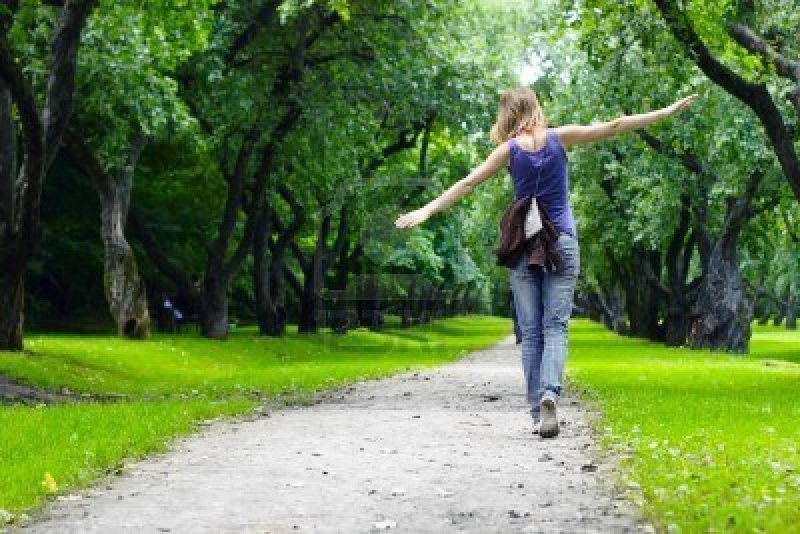
7888887-woman-walking-on-path-in-green-summer-parkBy: Megan Roop / Source: Mind Body Green

Your mornings set the tone for the rest of the day. We all know this. If you get off to a crummy start, chances are the rest of your day will look the same. Rolling out of bed with your smartphone in hand, scanning the latest Facebook posts and checking your email may not be the best start if you’re already super stressed.

More and more people are finding a meaningful morning practice to be the solution. By adding this practice in between waking up and starting the day, you’re sure to move through the world more grounded and connected, things we’re all craving more of in today’s busy world. Often the morning practice includes some combination of writing, movement and stillness. I’ve seen in my own life and in the lives of my clients how incredibly effective a morning practice like this can be.

But what about the mornings when you wake up with racing thoughts and to-do’s first thing? Or the mornings where the thought of sitting on a meditation cushion sounds like torture?

These are the days you skip your morning practice altogether, leaving you rushing through the day like you’re on a treadmill without an off switch. The days when 3pm rolls around and you’re eating a bag of chocolate chips mindlessly out of your desk drawer, worried a binge is just around the corner.

For many people, dealing with stress through food is an everyday struggle. Skipping a morning practice only makes this struggle more difficult. In order to step into your day with more mindfulness, you have to begin to be intentional from the moment you open our eyes.

So, the next time you want to bail on your morning practice or if you’ve been wanting to get started with one and don’t know how, I invite you to try the below. I created a simple practice to help you move through the day without stress calling the shots.

1. Place 1 to 2 drops of grapefruit or wild orange essential oil in the palm of your hands.

Rub your hands together, moving them back and forth 10 times. Cup your hands over your nose and mouth and breathe in deeply for five rounds of breath. There’s no need to force a certain type of breath; allow your natural rhythm to flow in and out.

2. Grab a piece of paper, a pen and make a dump list.

Write out every single thing that’s weighing you down, stressing you out or taking up an unusual amount of space in your head. Get it out and let it go. Don’t worry about this being in your to-do list notebook or electronic calendar. If it’s important enough, it will find it’s way to your master system later.

3. Move your body for five minutes.

It really doesn’t matter what you do here; just move out of your head and into your body. Dance to your favorite song, roll around on the floor, jump on a mini trampoline, do some head rolls or shoulder shrugs, move in a way that feels good to your body and your natural rhythm.

By giving your body the chance to practice dealing with stress in a different a way you’re creating a new positive pathway. This simple morning practice can be done in 15 minutes or less from anywhere in your home (or even your office).

Try it and notice how it sets you up to move through your day more mindfully and intentionally, with less stress. If you don’t have 15 minutes, choose one of the three and start there. The most effective practices are the ones that find a place in your daily routine. They aren’t the ones you think you “should” do.