Man with 1-in-500 Chance of Recovery Survives, Here’s His Secret:

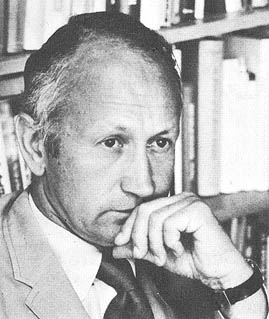
Norman_CousinsSource: Conscious Life News

In 1964, magazine editor Norman Cousins was diagnosed with ankylosing spondylitis, an arthritis-type auto-immune disease that affects the spine.

Doctors gave him a one-in-500 chance of recovery.

He scoffed at their prognosis and began a new type of therapy—happiness therapy—self-medicating with regular doses of mood-boosting movies and activities which he ultimately credited with his “dramatic recovery”.

Considered one of the forefathers of what’s known as psychoneuroimmunology (PNI), Cousins was one of the first to demonstrate the impact of moods on health.

As Mercola reports, research has also demonstrated that poor moods can similarly impact health.

One study found the tendency to always expect the worst in situations was tied to a 25 percent higher risk of dying before age 65.

(Special: Doctors Finally Admits To THIS New Miracle Cure!)

Stress is a risk factor for heart disease, but the link between moods and health goes further than stress triggering high blood pressure. Studies in the 1980s and 1990s revealed that the brain is “directly wired to the immune system”, as Scientific American puts it.

Parts of the nervous system are connected to parts of the body that regulate immune function like the thymus and bone marrow. Because immune cells also have receptors for neurotransmitters (the messengers of the nervous system), there is evidence this communication is direct.

HOWEVER, despite this clear evidence of a direct relationship between the brain (moods and happiness) and the immune system (health and illness-prevention), conventional medical practitioners are still suspicious of PNI.

While science and the medical world try and sort out their beliefs on the field, you don’t have to wait to put what we already know into action:

  • Foster healthy, happy relationships
  • Smile often
  • Laugh regularly
  • Meditate and destress

Alternatively… educate yourself today by watching this video below:

readthisordie

How Not To Be Offended – The Secret To Peace

PeaceSource: Spirit, Science And Metaphysics

There is an ancient and well-kept secret to happiness which the Great Ones have known for centuries. They rarely talk about it, but they use it all the time, and it is fundamental to good mental health. This secret is called The Fine Art of Not Being Offended. In order to truly be a master of this art, one must be able to see that every statement, action and reaction of another human being is the sum result of their total life experience to date.

In other words, the majority of people in our world say and do what they do from their own set of fears, conclusions, defenses and attempts to survive. Most of it, even when aimed directly at us, has nothing to do with us. Usually, it has more to do with all the other times, and in particular the first few times, that this person experienced a similar situation, usually when they were young.

Yes, this is psychodynamic. But let’s face it, we live in a world where psychodynamics are what make the world go around. An individual who wishes to live successfully in the world as a spiritual person really needs to understand that psychology is as spiritual as prayer. In fact, the word psychology literally means the study of the soul.

All of that said, almost nothing is personal. Even with our closest loved ones, our beloved partners, our children and our friends. We are all swimming in the projections and filters of each other’s life experiences and often we are just the stand-ins, the chess pieces of life to which our loved ones have their own built-in reactions. This is not to dehumanize life or take away the intimacy from our relationships, but mainly for us to know that almost every time we get offended, we are actually just in a misunderstanding. A true embodiment of this idea actually allows for more intimacy and less suffering throughout all of our relationships. When we know that we are just the one who happens to be standing in the right place at the right psychodynamic time for someone to say or do what they are doing—we don’t have to take life personally. If it weren’t us, it would likely be someone else.

This frees us to be a little more detached from the reactions of people around us. How often do we react to a statement of another by being offended rather than seeing that the other might actually be hurting? In fact, every time we get offended, it is actually an opportunity to extend kindness to one who may be suffering—even if they themselves do not appear that way on the surface. All anger, all acting out, all harshness, all criticism, is in truth a form of suffering.

When we provide no Velcro for it to stick, something changes in the world. We do not even have to say a thing. In fact, it is usually better not to say a thing. People who are suffering on the inside, but not showing it on the outside, are usually not keen on someone pointing out to them that they are suffering. We do not have to be our loved one’s therapist. We need only understand the situation and move on. In the least, we ourselves experience less suffering and at best, we have a chance to make the world a better place.

This is also not to be confused with allowing ourselves to be hurt, neglected or taken advantage of. True compassion does not allow harm to ourselves either. But when we know that nothing is personal, a magical thing happens. Many of the seeming abusers of the world start to leave our lives. Once we are conscious, so-called abuse can only happen if we believe what the other is saying.

When we know nothing is personal, we also do not end up feeling abused. We can say, “Thank you for sharing,” and move on. We are not hooked by what another does or says, since we know it is not about us. When we know that our inherent worth is not determined by what another says, does or believes, we can take the world a little less seriously. And if necessary, we can just walk away without creating more misery for ourselves or having to convince the other person that we are good and worthy people.

The great challenge of our world is to live a life of contentment, regardless of what other people do, say, think or believe. The fine art of not being offended is one of the many skills for being a practical mystic. Though it may take a lifetime of practice, it is truly one of the best kept secrets for living a happy life.

How to Become Anyone and Steal Their Best Qualities

Source: How to Become Anyone

Ever heard of the Raikov effect?
 

It’s easy to employ, but incredibly powerful.In a nutshell, it’s a secret mental technique that enables you to step into someone else’s shoes.

beanybody

And once you’ve “become” that other person, the skills you “borrow” remain with you.

The technique was discovered by Dr Vladimir Raikov in the early 1960s.

Since then, it’s been adapted by such well-known personalities as Win Wenger and Paul McKenna under the guise of Borrowed Genius and the Possibility Generator.

Now, for the first time ever, the technique is available in a brand new, easy-to-use package.

Using the latest technology, the Become Anybody technique gives you INSTANT ACCESS to the talents of your favorite genius… at the flick of a switch!

And all you have to do to make the technique work for you — is listen to the audio.

(SPECIAL: Secret European Experiment turns anyone into geniuses)

You’ll tune in to the characteristics of the person you want to emulate, whether it’s a celebrity, sports star, physicist, sculptor, artist, musician, mathematician, or anything else.

You’ll learn how to STEAL the qualities you admire the most… and add them to your own personality!

So if you’d like the business prowess of Richard Branson, the creativity of Da Vinci, the confidence of Brad Pitt, all you have to do is… SWITCH IT ON!

Remember, you can “become” ANYBODY you want to, at ANY TIME you want to.

The more often you use the program, the easier you’ll find it to “make the switch.”

The Become Anybody technique comes pre-loaded with a bunch of tailor-made applications covering sport, business, confidence and creativity, so you’ll NEVER run out of options.

And once you start using the program, you’ll discover that there really ISN’T any limit to what you can achieve.

Anyone

The Happiness Switch Inside Your Brain

HappyBy: Janice Mawhinney/ Source: Toronto Star

Can you learn to be a happier person by repeatedly visualizing two tiny parts of your brain and imagining yourself tweaking them?

Colorado teacher and musician Neil Slade says you can.

Slade has developed brain exercises, described on NeilSlade.com aimed at lifting your spirits and calming your fears. The website has become something of an underground sensation, attracting an average of 750,000 hits a month through word of mouth alone.

Slade suggests visualizing part of the primitive brain called the amygdala, commonly described as the seat of emotional experience. The two amygdalae, each about the size and shape of an almond, are located on either side of the head, between the eye and ear, about an inch in. Studies have shown the amygdalae have a part to play in everything from memory storage to anxiety.

Slade recommends locating your amygdalae in your thoughts, and visualizing a switch on each one, with the click-back position turning on the fear feelings, and the click-forward position turning on feelings of pleasure. Picture yourself purposefully clicking the switch forward.

Another way to stimulate lighter and happier feelings is to visualize yourself tickling each amygdala with a feather.

When University of Toronto psychologist Adam Anderson heard about the exercises, he laughed. The assistant professor is also the Canada Research Chair in cognitive neuroscience, and his research focuses on what the amygdalae contribute to human emotion. Anderson believes they are one of the elements of our feelings, but human emotions result from a delicate balance of the functions of different brain parts.

“I’m not saying it can’t work, but it’s a really silly idea that you actually have to picture your amygdala,” he says. “You could teach people to visualize their left elbows and it might be just as effective.

“It’s a form of relaxation and, if it works, more power to the people who do it. But as a scientist, I see it as maybe a form of meditation or a distraction from what’s bothering you.”

Slade thinks there is more to it than that. He believes visualizing the amygdalae can create physiological changes in the brain.

“You can directly elevate your mood through behavioural change such as laughter or physical exercise, or you can elevate it through mental stimulation like these amygdala exercises.”

Marie-Louise Oosthuysen de Guitierrez, a Mexico City teacher who is studying brain research in education, says Slade’s exercises work for her. “Visualizing clicking forward stimulates the prefrontal cortex,” she says. “It helps me to control intense emotions if I feel upset or angry. I immediately feel calmer.”

Janice Dorn, a psychiatrist and brain anatomist who has studied the brain for 41 years, believes Slade’s exercises stimulate the connections between the primitive, or limbic part of the brain and the more evolved prefrontal cortex in order to develop habits of happier thought and feeling.

Many people could learn to be happy by regularly repeating thought and visualization practices, Dorn says in a telephone interview from her office in Phoenix, Ariz.

It’s a matter of reprogramming your brain to have a tendency towards happiness instead of emotional pain, and most people can learn to do it.

She says choosing happiness over emotional suffering requires first consciously rejecting negative thinking.

She recommends quieting the mind and putting a larger perspective or a positive spin on your circumstances, imagining this moment 10 years in the future. Ask yourself how you can learn something useful from the experience.

“Look for a way to turn any part of it into a positive experience: that’s how the prefrontal cortex operates,” Dorn says. “The amygdala is always talking to the prefrontal cortex. So tell it about joy instead of telling it that you are a frightened, unhappy person who deserves to suffer.”

She suggests another exercise: Try to visualize your amygdalae lit up and shining beautifully. At that moment, take yourself to a time when you were as happy as you have ever been. Send the joy you feel to your prefrontal cortex so you can remember it.

“The more you practise these things, the more you can voluntarily increase the activity of the front cortical processing system. The more you do it, the better you get at it, and the better you feel.”

Those with serious mental illness or addiction problems should seek professional help, she adds. Instinct and emotions were once thought to originate in the limbic part of the brain, the first part to develop in humans.

The prefrontal cortex, the more evolved part of the brain , was believed to control higher functions such as judgment and permanent memory.

But Anderson says no one knows for sure where feelings originate. Still, much like cognitive therapy, he believes people can use their thinking to change the way they feel and this is how Dorn’s or Slade’s suggestions could work.

“Studies show that thinking supported by the prefrontal cortex can increase or decrease limbic responses,” Anderson observes. “You can reframe an event to make it look sunnier or feel better to you.

“There is new evidence from studies measuring brain activity that the prefrontal cortex can be called upon to turn up or down the activity in the … limbic regions such as the amygdala and hypothalamus. That is, having thoughts about how to make yourself feel better or worse actually changes the responses in primitive neural circuits, resulting in a genuine change in how emotions are created.”