Zero to hero: Four people with inspirational rags to riches stories

Source: News.Com.Au

SO you’ve started at the bottom with designs on the top job?

Don’t worry, it can happen, all you need is a little time. These five people have real-life stories of a meteoric rise to the top. You might even learn something from their journey.

ursulaInspirational Story #1: Ursula Burns

Ursula Burns grew up on Manhattan’s Lower East Side “when the gangs were there and the drug addicts were there,” according to the New York Times, before accepting an internship in the summer of 1980 which led to a stunning career as a Xerox “lifer.”

The internship led to a role as an executive assistant and Burns studied a masters in Engineering at Colombia while climbing the ranks to become the first African American woman to be CEO of a Fortune 500 company, according to Daily Muse.

She has been credited with transforming Xerox into a company that also provides IT services, with around half of its $22 billion revenue generated from systems that allow people to pay for parking, book flights and file health insurance claims online.

The Obama administration has also used her skills to lead a program that educates children in science and technology, and appointed her vice chair of the President’s Export Council.
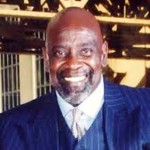
Chris Gardner

Inspirational Story #2: Chris Gardner

Chris Gardner’s real-life rags to riches story is depicted in smash hit The pursuit of happyness starring Will Smith, which portrays his rise from living on the streets to stockbroking guru.

Gardner spent his childhood in and out of foster homes, before finding himself homeless with his only son in San Francisco in 1981 where he spent a year sleeping rough in stations, shelters and public rest rooms while working as a trainee at stockbroking firm Dean Witter Reynolds.

He was the only one to be offered a job from the trainee group and worked at the company for two years, before being offered a similar role at Bear Stearns. From there he founded his own broking firm, Gardner Rich, in Chicago. He now works as an author and motivational speaker and has even collaborated on venture capital projects with Nelson Mandela.

Ralph Lauren

Inspirational Story #3: Ralph Lauren

Now he’s at home among the elite of fashion and politics, but Ralph Lauren, 73, got his start as a clerk in a men’s wear store where he learned the retail trade.

Born Ralph Lifshitz to a Jewish family in New York, the young Ralph was always fashion obsessed, according to his biography, spending his pocket money on suits making him the best-dressed 12-year-old in the Bronx.

He dropped out of college to serve in the army before leaving to work at Brooks Brothers as a sales assistant. He changed his name to Lauren and became convinced men were ready for a new style of tie that was brighter and bolder than previous models. His bosses weren’t convinced so he sold his own brand on the side, before founding Polo with $50,000 in the late 1960s. The fashion giant is now worth around $7 billion.

Oprah

Inspirational Story #4: Oprah

The television megastar’s tough upbringing inMississippi and Milwauke is well-documented, where she was abused by male relatives and gave birth to a son who died in infancy. However the young Oprah got her big break at 17 when she won the Miss Black Tennessee beauty pageant, which came with a job at a local radio station and a university scholarship.

She left university to focus on broadcasting where her emotional style struck a chord with viewers. She was offered a job at a struggling Chicago television show which was later renamed The Oprah Winfrey Show and syndicated nationally. After scooping a series of Emmys she founded Harpo Productions to focus on producing television, movies and magazines.

Her meteoric rise and cult-like following is credited to her emotional appeal and honesty with viewers. In 2011 she announced she would retire from daytime television after 25 years although she still conducts must-watch interviews like Lance Armstrong’s doping confession. Even off-air the 59 year old managed to top Forbes’ list of the 100 most powerful celebrities with earnings of more than $77 million in the last year.


wicked

10 Ways to Change Your Life in 59 seconds

imagesBy: Heidi Blake / Source: The Telegraph

You can change your life in 59 seconds by dropping your pet frog into conversation or keeping a picture of a baby in your wallet, according to a new science-based book by popular psychologist Richard Wiseman.

The ex-magician, who has a PhD in the psychology of deception, argues that tiny alterations to our day-to-day lives can make a huge difference to our overall happiness.

His new self-help book, 59 Seconds: Think a Little. Change a Lot, distils evidence from empirical studies in a variety of scientific journals into small nuggets of apparently life-changing advice.

The book includes chapters on work, relationships, attraction, decision-making and stress, and has been endorsed by Channel 4 illusionist Derren Brown as “a triumph of scientifically-proven advice over misleading myths of self-help”.

Mr Wiseman believes the science-based advice offered by his book is more objective than that of many others in the self-help genre.

“Some self-help books are simply practitioner-led” he told The Times. “A practitioner tells you ‘I think it would be good if you did this or that’ and if there’s evidence to back it up that’s fine, but other times they’re just saying it off the tops of their heads.”

The book suggests that the best way to avoid infidelity is to keep a picture of your partner in your wallet, while you can ensure that wallet is returned when lost if you display a photograph of a “cute” baby prominently inside.

The best way to get what you want is to lighten up a conversation by mentioning your pet frog, and you can ward off potential liars by closing your eyes and asking them to put their comments in email.

Other tips include:

– Next time you attend an important meeting, obtain a quick and easy psychological advantage by sitting in the middle of the group.

– On a date, start lukewarm and then become more positive later; focus on things that you both dislike, and mimic your date’s body language.

– To provide a significant boost to your happiness, force your face into a smile and hold the expression for 20 seconds.

– The best way of getting someone to like you is not to do them a favour, but rather to get them to do you a small favour.

– To reduce your drinking and eating, stick to tall narrow glasses, place a mirror in your kitchen and keep a food diary.

– Buy experiences not goods. Go to a concert, movie, unusual place or strange restaurant: anything that provides an opportunity to do things with others or tell people about it afterwards.

– Help to achieve your goals by telling them to friends, family and colleagues.

– To help keep your relationship alive, remember to balance each negative comment with five positive ones.

– When going for a job, give your credibility a boost by mentioning any obvious weaknesses towards the start of the interview.

– Pursue ‘intentional’ change by starting a new hobby, joining an organisation, learning a skill, initiating a project or meeting new people.

59

Easiest Productivity Tip Ever

imagesBy: Jill Konrath / Source: Life Health PRO

Did you know that the longest a person can focus intently on a task is 90 minutes? Any longer and productivity starts to spiral downhill—your mind wanders and you lose your edge. So what happens then? You start working on things that are easy but not very important in the overall scheme of things. And before you know it, the day’s gone.

A better approach is to get up and move. Go get some coffee. Take a brisk walk outside. Have a chat with a colleague. Call a friend on the phone. Do some stretching. And, if you work at home, consider doing the laundry or something else that’s totally mindless.

Aim for 15-20 minutes off. I know it feels as if you’re wasting time and not being productive when you take a break. But the truth is that your body and mind need that time to refresh. When you get back to your desk after your short break, you’ll be raring to go again.

Personally, I use this process whenever I schedule a day at the office. And, to make myself even more productive, I plan out my 90-minute sessions the night before. That way, when I arrive, I can focus on my most important “to do” first. The best thing about working this way is that I’m always accomplishing what really matters—instead of wasting time in on busy work just to keep going.

So give yourself a break. It’ll be well worth your time.

bf

The Healing Power Of Nature

images (4)Source: Castanet

The fourth principle of naturopathic medicine is the utilization of the “healing power of nature”. Don’t worry, this is not some “woo woo” concept where we believe that nature magically cures everything. “The healing power of nature” refers to the innate healing ability that exists in our organs, tissues, and cells. You can see this innate healing ability every time a wound heals, you sprain an ankle, or run a fever. Our body has built in mechanisms designed to respond, repair, and recover from injury and illness.

Optimal healthcare should not only avoid getting in the way of this innate healing ability but should also take advantage and utilize it. Unfortunately, the conventional medical approach employs far too many tactics that works against the body’s healing mechanisms. A great example of this is with the use of anti-inflammatory medications like the non-steroidal anti-inflammatory drugs (NSAIDs). These are most often prescribed as a treatment for pain due to trauma. They work to reduce pain by inhibiting inflammation. Unfortunately, inflammation is the major mechanism for healing from trauma. Therefore, people who take NSAIDs after injuries actually inhibit their healing and over-time lead to an increased risk of degeneration of the injured tissues.

NSAIDs are only one example of the “Anti” approach in medicine. How many types of medications, supplements, and other medical interventions can you think of that have “Anti” in the title? Here are a few examples, antioxidant, antipyretic, anti-inflammatory, antiemetic, antibiotic, anti-lithic, anti-diuretic, antidepressant, antihistamine, antispasmodic and so on. It seems like all you have to do is name a symptom or disease and put the word “Anti” in front of it and you will sure enough find a medical intervention that matches it.

(Special: The FDA Wants To Ban This Natural Cure!)

Healthcare should be more than the administration of therapies that act as the opposite of the symptom. While there are times when the body’s responses can become pathologic and need to be altered there are numerous more examples where we are just simply getting in the way of our body healing itself. Instead of shutting down or inhibiting natural reactions of the body and the immune system we should be looking for the deeper causes of the problem.

The innate healing ability of the body works best when the body is given all the nutrients it requires for healing. Nutrient deficiency acts as a significant inhibitor to healing and recovery. The nutrients I am speaking of include vitamins, minerals, proteins, carbohydrates, and essential fatty acids. They also include nutrients that are often overlooked like proper oxygenation, adequate sleep, and optimal circulation. Deficiencies in any of these nutrients may not only decrease healing but may lead to unwanted healing responses. For example, when ligaments and tendons are damaged after a sprain they need Vitamin C and the amino acids lysine and proline in order to repair and regenerate. If those nutrients are not available healing will take longer and the type of collagen tissue that regenerates may be of a lesser composition than would have been in the presence of optimal levels of these nutrients.

One of the best ways to promote the body’s innate healing responses is to remove the factors that inhibit that ability. For example, food allergies cause the immune system to attack protein molecules in the intestines. This not only causes inflammation in the intestines but often increases systemic inflammation and leads to joint pain, eczema, psoriasis, skin rashes, asthma, and decreased immunity. When food allergies are identified and removed the immune system begins to function better and healing from other problems improves.

Optimal healthcare should take advantage of the body’s innate healing mechanisms. There are no man-made materials or nutrients that can compete with what nature has given us. The first and best option is always to work with and promote the body’s healing abilities and utilize man-man solutions when necessary. Unfortunately, far too often the body’s healing responses are suppressed and synthetic solutions take the forefront. However, this is like jumping off a cliff with a pair of wings and believing that you are flying. You may think you are overcoming gravity but eventually you’ll find out there is no such thing. These innate healing responses are too ingrained and deep rooted for us to overcome. Therefore, the best thing to do is work in harmony with and harness them.

miracle cure