6 Ways To Reconnect Wth Your Most Powerful Self

Freedom from DepressionBy: Amanda Christian / Source: Mind Body Green

Between all the tasks, people and activities competing for our attention every day, it’s so easy to get lost in the routine and lose touch of our most powerful, loving selves.

Before we know it, we’re acting out of habit or are glued to the computer. The following are some ways I get real, and come back to myself:

1. Spend time alone.

Spend time alone with no social media or cell phone. Gasp! Most of us are connected all the time, and it’s very easy to get out of touch with how we feel.

It’s so important to spend time with yourself every day in order to recharge your self-love battery and come back to the awareness of the loveliness all around you in this moment.

2. Feel your feelings.

There is nothing “spiritual,” positive or holy about hiding your feelings and pretending you are happy when you’re not.

This doesn’t mean that you need to act on all your feelings; instead, be honest with yourself about what you’re feeling so that it can move through you and be released. You become more real by becoming more honest.

3. Journal.

Becoming more honest with yourself might bring up some feelings about your past that need to be released. Write them down.

My journal is a mess of misspelled words, run-on sentences, unfinished poems, weird doodles and the occasional “ah-ha” moment circled with stars and exclamation points. There are no rules. Just let the feelings and ideas out!

4. Spend time in nature.

Mother nature is my best friend. No joke. Whenever I’m feeling a little funky, usually from too much computer time, I throw on my sneakers and head out to the woods for a little forest therapy.

Deeply breathe in the fresh air, hug a tree, smile and remember all the love you have in your life right now.

5. Release the need for external validation.

Most of us are motivated to do and say things based on the way we think others are going to respond. This isn’t good or bad, but it’s meaningless.

You can’t control or predict how other people feel or react. Go with your gut. Set the intention for peace. When you act from a place of authenticity, likability will follow. I promise.

6. Claim your power.

Don’t be afraid of outshining others. As Marianne Williamson said, “As we let our own light shine, we unconsciously give other people permission to do the same.” Don’t be afraid to go after your passions and let yourself shine.

Now that you’ve just spent time reading how to be more true to yourself, how can you apply these ideas? It’s in the application of the ideas that you will experience the change. Today I challenge you to do at least one of the things above.

Want an idea? How about ditching the cell phone and venturing out for a walk by yourself? Bring your journal to write out your feelings, sit under a tree and bliss out. That’s the makings of one delightful authentic connection with my most powerful loving self if you ask me! Soak it in.

5 Spiritual Places You Must Visit Before You Die

easter islandBy: Gemma Collier / Source: Spirit Science and Metaphysics

Some places are holy: sites of religious significance and formal worship. Jerusalem, Mecca, the Vatican and Maya Devi, birthplace of the Buddha, all regularly attract visitors and devotees in the millions. These are indeed special places.

But beyond the confines of formal contemporary religion other sites exist around the globe that are no less spiritually significant.

Whether the religious beliefs that saw them constructed are no longer accessible, or because of some less tangible reason, there remain some places that deliver sense of the mystic and the eternal in a way that simply has to be experienced to be believed.

Whether we call this shamanic journeying, or merely enlightening tourism, here is our list of five spiritual destinations that are perfect for combining seeing with believing.

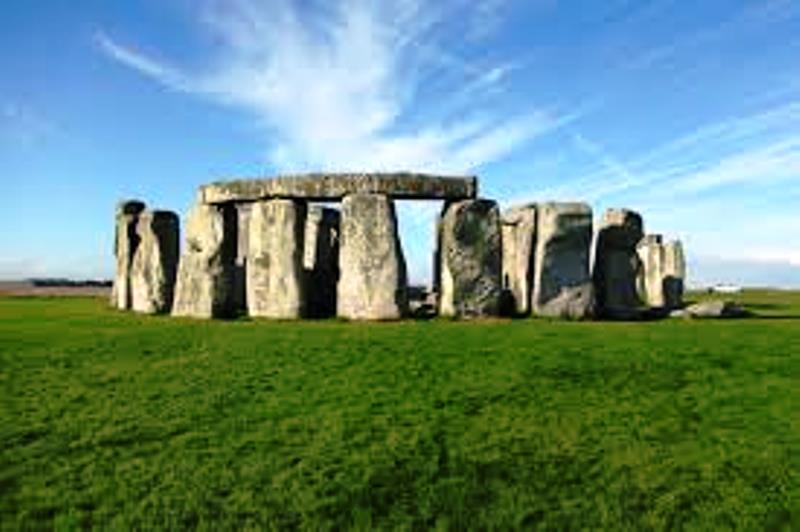
Stonehenge1) Stonehenge

Set amidst the familiar tranquility of the English countryside, Stonehenge is massively enigmatic. Although it is aligned with the stars and the summer and winter equinoxes, no-one knows precisely why the great stone circle was erected.

And just as no-one can explain its function, no-one has yet been able to divine precisely how it was constructed. The great ring of stones offers only the most tantalizing clues as to the beliefs it was made to stand for.

But there remains an aura amidst the stones that speaks to all who stand within their shadow.

THE CAVES OF THE DORDOGNE2) The Caves of the Dordogne

Beneath the picturesque valley of the Dordogne River in Western France, a network of caves and ‘grottes’ reveal traces of mankind’s earliest spiritual awakenings.

The paintings etched into the rocks here tens of thousands of years ago are amongst the earliest known human artworks. Not even the work of modern humans, but of Cro-Magnon Man, contemporary of the Neanderthal, identifiable deer, ibis and other animals are marked against the rock.

To be so close to such distant ancestry is a profoundly moving experience.

960 3-Column PSD Grid Template3) Ayors Rock

The majesty of nature needs no adornment. To the Anangu people of central Australia Uluru, as they call it still, is a lasting totem of the great spiritual force that forged every aspect of their world.

A monument to the dreamtime – when time began and the Anangu first walked the earth – Uluru’s stark sandstone mass conveys a deep and lasting sense of the unity of human life with the inanimate world of which we are but one small part.

KOYASAN4) Koyasan

Sacred to Japanese Buddhism since the ninth century, Koyasan is a region dedicated to spiritual contemplation. Ancient cedar forests share space with historic pagodas, paved roads and a peculiarly Japanese sense of reverence.

An emphasis on the timeless qualities of nature and simplicity make this a must-see destination for Buddhists and non-Buddhists alike.

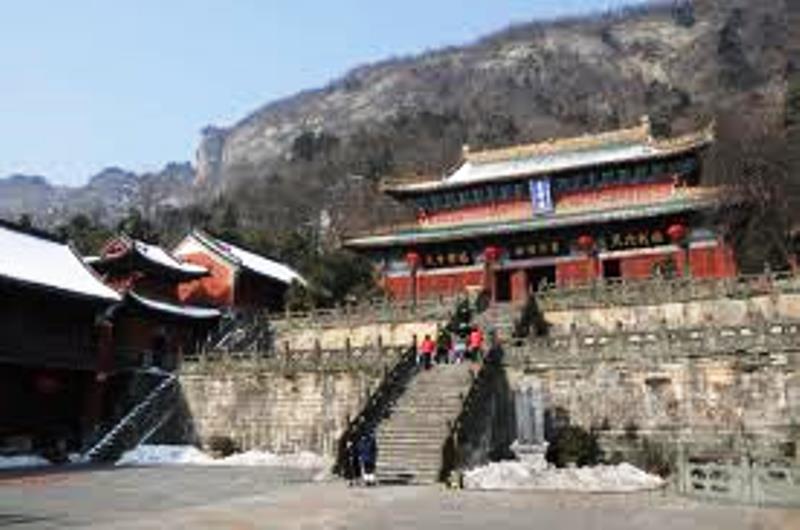
WUDANG MOUNTAINS5) Wudang Mountains

Located in the northwest of China’s Hubei province, Wudang is perhaps the best known of China’s Taoist holy mountains. A UNESCO World Cultural Heritage Site since 1994,

Wudang Mountain and its surrounding area is stunningly beautiful. Realising the Taoist principle of harmony between man and nature, Wudang’s picturesque buildings date as far back as the 15th century.

But it had been a sacred site long before it was first claimed as an especially spiritual place by the 8th and 9th century Tang dynasty. Irrespective of that imperial footprint, the thin mountain air or Wudang shimmers with a sense of the divine.

Wudang has always been a special place.

There are of course other places that could be on this list too of course. The earth is full of wonderful places of spiritual significance that will certainly enhance your life if you pay them a visit. Get out there!


7 Common Meditation Myths

meditation msytSource: Psychics Universe

Despite all the widely publicized benefits of meditation, believe it or not, some people still have misconceptions about this wonderful practice.

Here are 7 common myths that are still in existence today.

1. It Takes Too Much Time to Meditate

Meditation doesn’t mean endless hours sitting in the lotus position. To gain the most benefit from a meditation practice, experts suggest two 20-minute sessions, one in the morning and one in the evening.

However, even one daily 15-minute session can still improve your life.

2. It Takes Years of Practice Before You Reap Benefits

Meditation is just like any other skill; it gets better over time and provides more benefits as time progresses. But it doesn’t take years of practice. Even your first meditation session can benefit you by providing a sense of calm and well-being.

3. Meditation Is a Chore

That’s one way to look at it, but meditation should be considered as something more pleasant. Consider it “me” time or a well-deserved break.

4. Meditation Is New Age Hippie Stuff

Plenty of New Agers and Hippies practice meditation, but they didn’t invent it. Meditation has been around for thousands of years and has been used for improving the health of body and mind, as well as spirit.

5. Meditation Is Religious

People of various religions practice meditation, but meditation in and of itself is not affiliated with any form of worship. No matter what your beliefs, you can practice meditation. Even non-believers can (and do) practice it!

6. Meditation Is the Same as Relaxation

Although both meditation and relaxation can help you feel calmer, they are actually quite different. According to scientific studies, meditation creates specific changes in the brain’s chemistry, releasing hormones that create a sense of well-being.

Certain forms of meditation, such as Buddhist, also target specific brain regions that boost positive feelings.

7. People in Cults Practice Meditation

It’s possible that people in cults practice meditation, but meditation is not cult-like behavior. Cults are all about manipulation, coercion and groupthink.

Meditation is about freeing one’s mind and developing an independent spirit. If anything, practicing meditation would likely cause a cult member to challenge the group’s beliefs and seek personal freedom.

You Can Benefit from Unconditional Prayer in 4 Simple Steps

By: Vicki Howie / Source: Conscious Life News

We’ve all heard of unconditional love, but there’s a concept that is fair less popular and perhaps even more important. It’s unconditional prayer, the practice of communicating with the Divine for the more connection, service and surrender.

Unconditional prayer is the anti-thesis of “shopping list” praying where we tell the Divine what we want and when we want it.

Before I can really describe what it is and how to do it, though, I need you to better understand the related concept of trust. There are two types of trust – little trust and BIG TRUST.

The most popular, garden variety type of trust is little trust. Most of us practice this kind of trust on a daily basis. It’s when we have faith that things are going to go OUR way; that is, the way our ego wants them to go.

We commonly say we “trust” someone when we feel they’re going to behave the supportive way we want them to behave.

Big trust is something different altogether. Big trust is when we believe the Divine is doing everything FOR us, rather than TO us. It’s when we believe that no matter how things work out, it’s all for our growth.

It’s when we trust that even when “bad” or challenging things happen, the Divine has got our back.

It’s true. The Divine really does have your back, but if you’re too busy trying to control things – even in your prayers – then it’s hard to experience the benevolent flow of the bigger picture.

Simply put, unconditional prayer is the practice of trusting the Divine in a BIG way. Practicing it can give you a greater sense of acceptance, peace and flow in your life.

So if you want to experience it more often, here are a few ways you can pray more unconditionally.

HOW TO PRACTICE UNCONDITIONAL PRAYER

1) Before you pray, do some sort of centering practice to open yourself to Divine connection. It you don’t have a practice you love, try this simple one.

Inhale and imagine magnetizing a beam of energetic light from the sky through the crown of your head into the bottom of your heart. Hold it in here in your heart for a moment, then exhale and press it down through your tailbone into the core of the earth.

Notice how anchored it makes you feel to be deep in the earth, then, on the next inhale, draw that energy (that is earthier now) back up into the bottom of your heart and gently hold it again.

Exhale and send it through your crown to the sky. Repeat the process several times until you feel, clear, peaceful and gently energized.

2) Before you ask for anything specific, say something like this: I am deeply committed to my spiritual growth. Please give me the courage, insight and acceptance I need to make the highest choices I can.

Fill me with trust for all that is. Help me to know everything is unfolding with Divine Perfection.

3) When you have specific things you want to ask for, say something like this: I humbly ask (fill in the blank with what you want). This is what I believe I want and need now.

I fully trust that you will give me this or something better for myself, my growth and for the good of all those around me.

4) Finish with a huge heap of gratitude that your request has been received. You can simply say this: Thank you, thank you, thank you, thank you (or some variation there of).

Try this for a week or so and see how you feel. I believe you’ll find that as you do it regularly, your BIG trust grows and so do you.